
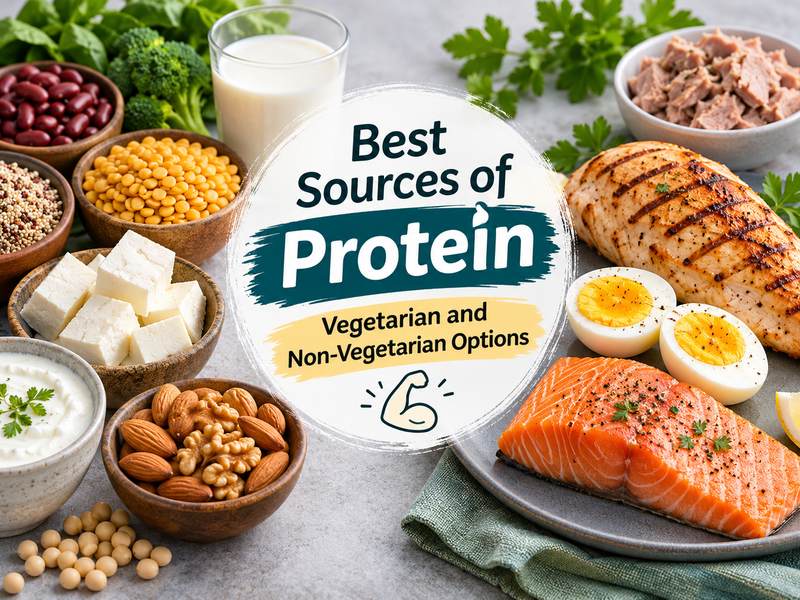
Protein is the building block of your body. It helps repair muscles, make hormones and enzymes, support your immune system and keep you feeling full between meals. Whether you’re an athlete, a busy professional, a growing teenager or simply trying to eat healthier, getting enough protein matters.
But with so many foods, powders and trends out there, where should you actually get your protein from? This guide covers the best sources of protein for both vegetarians and non-vegetarians, with approximate protein counts, practical tips and simple meal ideas.
How Much Protein Do You Need?
The general recommended intake for healthy adults is about 0.8 grams of protein per kilogram of body weight per day. For a 60 kg person, that’s roughly 48 grams daily; for a 75 kg person, about 60 grams.
Some people need more, including:
- People who exercise regularly or do strength training
- Older adults, who may need more to maintain muscle
- Pregnant and breastfeeding women
- People recovering from illness or surgery
Many experts suggest around 1.2 to 2.0 g per kg for active people, but your ideal amount depends on your health, goals and activity level. If you have kidney disease or another medical condition, ask your doctor before raising your protein intake.
What Makes a Good Protein Source?
Proteins are made of amino acids. Nine of them are “essential,” meaning your body can’t make them, so you must get them from food.
- Complete proteins contain all nine essential amino acids in good amounts. Most animal foods, plus soy and quinoa, fall in this group.
- Incomplete proteins are lower in one or more essential amino acids. Many plant foods, such as grains, beans and nuts, fit here.
The good news: you don’t need to combine plant proteins at every meal. Eating a variety of plant foods throughout the day (for example, lentils with rice, or hummus with whole wheat bread) easily covers your amino acid needs.
Best Non-Vegetarian Sources of Protein
Animal foods are dense, high-quality protein sources. Approximate values are for cooked portions.
1. Chicken Breast
About 31 g per 100 g. Lean, versatile and easy to cook in many ways. Choose grilled, baked or curry-style over deep-fried.
2. Eggs
About 6 g per large egg. Eggs are a complete protein, affordable and packed with vitamins and minerals, including B12 and choline.
3. Fish and Seafood
- Tuna (canned, in water): about 25 g per 100 g
- Salmon: about 22 to 25 g per 100 g, plus omega-3 fats
- Shrimp: about 24 g per 100 g
- Sardines: about 25 g per 100 g, with omega-3s and calcium if you eat the bones
- Cod and other white fish: about 20 to 23 g per 100 g
4. Turkey
About 29 to 30 g per 100 g for breast meat. A lean alternative to chicken.
5. Lean Beef, Mutton and Pork
About 25 to 27 g per 100 g for lean cuts. They also provide iron, zinc and B12. Choose lean cuts and keep portions moderate, since high intakes of red and processed meat are linked with health risks.
Best Vegetarian Sources of Protein
A vegetarian diet can easily meet your protein needs with the right choices.
1. Lentils and Dals
About 15 to 18 g per cooked cup, depending on the type (moong dal is around 14 g). They’re also loaded with fiber, iron and folate.
2. Chickpeas, Kidney Beans and Other Beans
About 12 to 15 g per cooked cup. Use them in curries, salads, soups, wraps and dips.
3. Paneer and Cottage Cheese
Paneer provides roughly 14 to 20 g per 100 g depending on the brand and fat content. Western-style cottage cheese offers about 12 to 14 g per half cup (low-fat).
4. Greek Yogurt and Curd
Greek yogurt provides about 15 to 17 g per 170 g serving. Regular curd (dahi) is lower, at roughly 3 to 4 g per 100 g, but still helpful. Milk gives about 8 g per cup.
5. Tofu, Tempeh and Soy Products
- Firm tofu: about 10 to 17 g per 100 g
- Tempeh: about 19 to 20 g per 100 g
- Edamame: about 17 g per cooked cup
- Soybeans, cooked: about 29 g per cup
- Soya chunks (dry): about 50 g per 100 g dry weight, which rehydrates to a much lower amount per cooked serving
Soy is one of the few plant foods that is a complete protein.
6. Quinoa and Whole Grains
Quinoa offers about 8 g per cooked cup and is a complete protein. Oats provide about 6 g per cooked cup, and whole wheat roti or bread adds a few grams per serving.
7. Nuts and Seeds
- Peanuts: about 7 g per ounce
- Peanut butter: about 7 to 8 g per 2 tablespoons
- Almonds: about 6 g per ounce
- Pumpkin seeds: about 8 to 9 g per ounce
- Hemp seeds: about 10 g per 3 tablespoons
- Chia seeds: about 5 g per 2 tablespoons
8. Green Peas and Vegetables
Green peas give about 8 to 9 g per cooked cup. Spinach, broccoli and sweet corn contribute smaller but useful amounts.
9. Seitan
Made from wheat gluten, seitan provides about 25 g per 100 g. It’s not suitable for people with celiac disease or gluten sensitivity.
Protein Comparison Table
| Food | Type | Serving | Approx. protein |
|---|---|---|---|
| Chicken breast, cooked | Non-veg | 100 g | 31 g |
| Turkey breast, cooked | Non-veg | 100 g | 29 g |
| Lean beef, cooked | Non-veg | 100 g | 26 g |
| Tuna, canned in water | Non-veg | 100 g | 25 g |
| Salmon, cooked | Non-veg | 100 g | 22 to 25 g |
| Shrimp, cooked | Non-veg | 100 g | 24 g |
| Egg | Non-veg | 1 large | 6 g |
| Soybeans, cooked | Veg | 1 cup | 29 g |
| Seitan | Veg | 100 g | 25 g |
| Tempeh | Veg | 100 g | 19 to 20 g |
| Paneer | Veg | 100 g | 14 to 20 g |
| Lentils, cooked | Veg | 1 cup | 18 g |
| Edamame, cooked | Veg | 1 cup | 17 g |
| Greek yogurt | Veg | 170 g | 15 to 17 g |
| Chickpeas, cooked | Veg | 1 cup | 15 g |
| Quinoa, cooked | Veg | 1 cup | 8 g |
Values are approximate and vary by brand, cut and cooking method.
Animal vs. Plant Protein: Which Is Better?
Neither is “better” for everyone. Each has its strengths.
Animal protein is complete, highly digestible and a rich source of B12, iron, zinc and omega-3s (in fish). However, some options, such as processed and fatty red meats, come with added saturated fat and other risks.
Plant protein comes with fiber, antioxidants and healthy fats, and is linked with better heart health. Plant-based eaters should pay attention to vitamin B12, iron, zinc and omega-3s, and may need a B12 supplement if they avoid animal foods completely.
Many people do well with a mix: plenty of plant proteins, with moderate amounts of fish, eggs, dairy and lean meat if they choose to eat them.
Sample High-Protein Meal Ideas
For Non-Vegetarians
- Breakfast: Veggie omelet with whole wheat toast
- Lunch: Grilled chicken salad with chickpeas
- Snack: Greek yogurt with almonds
- Dinner: Baked salmon, quinoa and steamed broccoli
For Vegetarians
- Breakfast: Moong dal chilla or oatmeal with peanut butter and chia seeds
- Lunch: Rajma or chole with brown rice and a side of curd
- Snack: Roasted chickpeas, a handful of nuts, or a glass of milk
- Dinner: Paneer or tofu stir-fry with vegetables and a whole wheat roti
Simple Ways to Eat More Protein
- Include protein at every meal. Spreading it across the day supports muscle and keeps you full.
- Build meals around a protein first. Then add vegetables and whole grains.
- Choose protein-rich snacks. Think nuts, yogurt, boiled eggs, roasted chana or sprouts.
- Upgrade your staples. Swap plain pasta for whole wheat or chickpea pasta, and add lentils to rice.
- Keep convenient options on hand. Canned tuna, boiled eggs, tofu, paneer and canned beans save time.
- Watch the extras. Protein bars and shakes can be convenient, but check labels for added sugar.
Do You Need Protein Powder?
Most people can meet their needs with food alone. Protein powders can be handy for athletes, older adults with low appetite, or anyone struggling to reach their target. If you use one, choose a product with minimal added sugar and, ideally, third-party testing. Whey is popular for non-vegetarians and vegetarians who eat dairy, while pea, soy and rice blends suit vegans.
Is It Possible to Eat Too Much Protein?
For healthy people, moderately high protein intake is generally safe. Still, extremely high intakes can cause digestive discomfort, and they may be risky for people with kidney disease. Protein shouldn’t crowd out other important foods like vegetables, fruits and whole grains. Balance is key.
Final Thoughts
Getting enough protein doesn’t have to be complicated. Whether you prefer eggs, fish and chicken or lentils, paneer and tofu, the best approach is variety. Include a quality protein source at each meal, pair it with vegetables and whole grains, and choose the options that fit your taste, budget, culture and health needs.
Disclaimer: This article is for general educational purposes only and is not a substitute for professional medical or nutritional advice. Consult a doctor or registered dietitian for guidance tailored to your needs.
Frequently Asked Questions
There's no single best source. Eggs, fish, chicken, soy, lentils, Greek yogurt and paneer are all excellent, depending on your diet and preferences.
Soy foods (tofu, tempeh, edamame), lentils, chickpeas, paneer, Greek yogurt and seitan are some of the strongest options.
Yes. With a balanced mix of legumes, dairy, soy, whole grains, nuts and seeds, vegetarians can easily meet their needs.
Tuna, salmon, sardines and shrimp are all high, at around 22 to 25 g per 100 g cooked.
A common target is about 20 to 30 grams per meal for most adults, though individual needs vary.
Protein can help you feel full and preserve muscle while losing weight, making it a useful part of a balanced eating plan.